
Javelo
How Coconut Sugar Is Made: From Raw Material to Export Ready Product

Coconut sugar is made from the sap, also known as nira in Indonesia. Farmers collect the sap, and a manufacturer filters it, heats it until it thickens, turns it into granules, and dries it to a stable moisture level. The finished sugar is then tested, sieved, packed, and shipped.
For B2B buyers, the details of each step matter. They decide the taste, color, shelf life, and safety of the sugar you receive. The quality of the final product depends not only on the raw material, but also on how the sap is handled, how consistently it is processed, and how quality is controlled before the product is packed and shipped.
The process can be summarized as:
Sap collection → Receiving and filtering → Heating → Crystallization → Drying → Sieving → Quality control → Packing and shipping
What Is Coconut Sugar Made From?
Coconut sugar comes from the sap of the coconut palm flower. It is not made from coconut meat, coconut water, or coconut oil. Farmers cut the flower stalk and collect the sweet liquid that drips out. Fresh sap is mostly water, with natural sugars and small amounts of minerals.
Because the sugar starts as a fresh, so it easily goes bad, the first hours after collection are very important. Sap ferments quickly, so speed and clean handling decide the quality of the final product.
For B2B buyers, this means that evaluating a coconut sugar manufacturer or supplier should start before the product reaches the factory. A manufacturer with controlled sourcing and good relationships with farmers can have better visibility over the raw material entering the production process.
Is Coconut Sugar Natural?
Coconut sugar is made with simple steps, heating the sap and drying it into granules. Typical production does not need chemical refining or bleaching, which is why many brands describe it as a natural sweetener.
But, the term natural should not be confused with organic. Natural describes the origin and general nature of a product, while organic refers to compliance with specified organic production standards and certification requirements.
For buyers sourcing organic coconut sugar, it is therefore important to check the manufacturer’s applicable organic certification and documentation rather than rely only on the word “natural”
How Is Coconut Sugar Made Step by Step?
Here is the full coconut sugar production process, from the palm tree to the shipping container.
Step | What happens | Why it important |
Sourcing and collecting | Farmers tap the flower and collect the sap | Fresh sap means better quality |
Receiving and filtering | Sap is checked and cleaned | Removes dirt and rejects poor sap |
Heating | Water is evaporated, and sap thickens | Develops color and caramel flavor |
Crystallization | Thick syrup turns into sugar crystals | Forms the granules |
Drying | Moisture is reduced | Prevents clumping and spoilage |
Sieving | Granules are sorted by size | Matches your mesh size |
Quality control | Samples are tested | Confirms safety and spec |
Packing and shipping | Sugar is packed and exported | Protects the product in transit |
1. Sourcing and Collecting the Sap
Everything begins with farmers. They collect the sap by cutting the flower stalk and put it in clean containers, usually once or twice a day. Proper handling at this stage is important because the raw material becomes the foundation of the finished coconut sugar.
How a manufacturer sources the sap is a key quality question. Direct sourcing means the manufacturer works with farmers directly. The sap and raw material are fresher, quality is more consistent, and it is easier to trace where the product came from. For long-term supply, direct sourcing from supported farmers gives buyers more stability.
2. Receiving and Filtering
When the sap arrives at the processing site, it is checked before it goes into production. Sap that looks, smells, or tests wrong should be rejected. The accepted sap is then filtered to remove leaves, insects, dust, and other particles.
This step looks small, but it protects the whole batch.
3. Heating the Sap
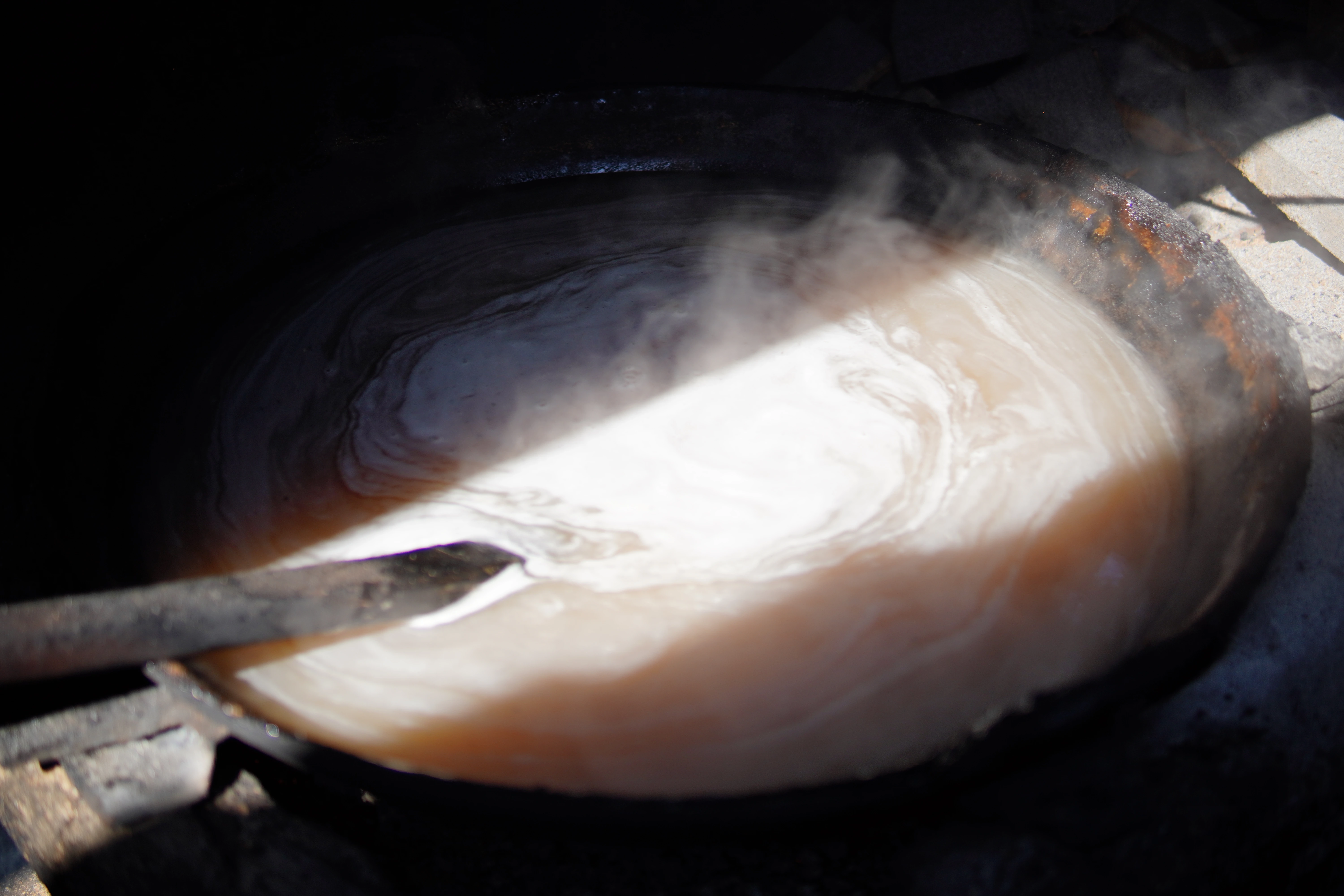
The filtered sap is heated to reduce its water content and concentrate the sugars. As the water leaves, the sap becomes a thick, sweet syrup. The heating also gives coconut sugar its golden-brown color and its mild caramel flavor.
Controlled processing is important at this stage. Differences in processing conditions can influence characteristics such as color, aroma, texture, and overall product consistency. For example, too much heating can darken the sugar and change the taste.
A good coconut sugar manufacturer follows a fixed, repeatable procedure, so that each batch tastes and looks the same.
4. Crystallization
After the syrup reaches the right thickness, it is stirred and cooled. As it cools, the sugar crystallizes and turns from a sticky syrup into a dry, solid sugar. Further processing transforms it into the granulated form commonly used by food manufacturers, ingredient suppliers, and other B2B customers.
This step shapes the texture of the final product. It is also where the "granulated" form that most food and beverage buyers want is created, because granules measure, mix, and dissolve more easily than solid blocks.
5. Drying and Moisture Control
Freshly crystallized sugar still holds some moisture. It is dried so the moisture content reaches a low and stable level.
Moisture control is important for granulated coconut sugar. Too much moisture can cause clumping, mold, and short shelf life.
Coconut sugar naturally absorbs moisture from the air, so a low starting moisture level and good packaging protect it during storage and shipping.
6. Sieving and Mesh Size Control
Once dry, the sugar is sieved to sort the granules by size. This is called mesh size control. Mesh size can be important for industrial applications because different food products may require different particle characteristics.
For example, finer granules dissolve faster, which helps in drinks and mixes. Coarser granules suit for toppings and table use. If your factory uses automatic machines, a consistent mesh size also helps the sugar flow smoothly. A manufacturer that can offer custom mesh sizes gives you more control over your own product.
7. Quality Control and Laboratory Testing
Before the sugar is packed, samples are tested for the key quality points, such as appearance, taste, moisture, and safety. Quality control is carried out throughout the manufacturing process and before the finished product is released.
Good manufacturers do not stop at in-house checks. They also work with independent, accredited laboratories, because outside results are more objective and more trusted by auditors and customers.
Each batch should come with a Certificate of Analysis (COA), a document with the lab results for that batch.
Another important safety step is metal mitigation. Production lines can use magnetic metal traps to catch tiny metal pieces that could come from machines. This lowers the risk of contamination and helps meet strict food safety requirements.
8. Packing and Shipping
One the coconut has passed the required quality checks, it can be packed according to the agreed specification. Packing requirements may vary depending on the buyer’s application, order volume, destination, and storage conditions. B2B buyers may require bulk packing for industrial production or customized packaging formats for their own products.
Before shipping, make sure the documents match the goods. Typical documents include the COA, certificates (organic or food safety), and export papers.
Traditional vs Industrial Production: What Changes?
Coconut sugar has traditionally been produced by collecting coconut sap and concentrating it through heating. Many small-scale producers continue to use traditional production methods.
Industrial coconut sugar manufacturing builds on this basic process but introduces greater control and standardization.
The main differences can includes:
Traditional | Industrial | |
Raw material | Local farmers sourcing | Structured sourcing and supplier control |
Batch consistency | Can vary a lot | Standard procedures, repeatable results |
Processing | Smaller-scale processing | Standardized production procedures |
Quality control | May rely heavily on visual checks | Defined specifications and testing |
Particle size | May vary | Controlled through sieving |
Traceability | Hard to follow | Batch and supply-chain traceability |
Hygiene | Depends on each producer | Controlled and documented |
Final form | Often blocks or uneven granules | Uniform granules, custom mesh size |
Packaging | Local or basic packaging | Packaging based on B2B/export requirements |
Documentation | Limited | Product and export documentation |
Traditional production is not "bad." It is the root of this industry, and many farmers still collect sap in the traditional way. But for B2B buyers who need steady quality, documents, and long-term supply, a managed facility will reduce the risk.
For B2B buyers, the important question is not simply whether a manufacturer uses traditional or modern methods. It is whether the manufacturer can consistently conduct on the internal control system to make sure the coconut sugar product meets international standards.
Why the Process Matters for Quality
Understanding the coconut sugar manufacturing process helps buyers see why quality can vary between suppliers. If one stage is poorly controlled, it can affect the final product. Here are why every steps affects the result:
Taste and color: come from the sap freshness and the heating control.
Texture and flow: come from crystallization and sieving.
Shelf life: depends on drying and moisture control.
Food safety: depends on filtering, hygiene, metal mitigation, and lab testing.
Consistency: depends on how well the manufacturer repeats the same steps every time.
Two companies can sell coconut sugar at similar prices, but one process may be tightly controlled while the other is not. That difference usually shows up later, in rejected batches, customer complaints, or failed audits.
What B2B Buyers Should Ask About the Manufacturing Process
Before selecting a coconut sugar manufacturer or supplier, you should ask questions that cover the complete supply chain.
Where does the sap come from? Direct from farmers, or through traders?
Do you own and operate the production facility? Can I visit or see a video tour?
How do you control each step? Is there a written procedure for heating, drying, and sieving?
What is your moisture specification, and how do you test it?
Do you use independent, accredited labs, and can I get a COA for each batch?
Can you trace my batch back to the source and the production date?
What do you do to prevent metal contamination?
Can you deliver the same quality in month 12 as in month 1, including during the rainy season?
For detailed information, check Coconut Sugar Manufacturers: A B2B Buyer's Guide.
How Javelo Makes Coconut Sugar
At Javelo, coconut sugar manufacturing is divided into two parts, farmers processing and Javelo processing.
1. Farmers processing
Farmers collect the coconut sap directly once a day
The sap is heated to reduce its water and concentrate the sugars
Once the sugar syrup has thickened, it is left to cool until it becomes more solid.
To create granulated coconut sugars, the farmers using traditional method for grinding
The granulated coconut sugar is then sifted to get finer granule.
2. Javelo processing
After collecting the coconut sugar from the farmers, the sugar is tested to verify its organic status.
Granulated coconut sugar from the farmers undergoes a second drying and sieving process to reduce its moisture and to get appropriate mesh size.
The coconut sugar also undergoes three rounds of quality control using a magnetic trap and manually to ensure there are no harmless components or metal contamination.
Laboratory testing and quality control are conducted to make sure the appearance, moisture, taste, and safety meet the standard before packed.
We use Javelo360 for end-to-end traceability. Our digital system tracks every gram from source to finished product. It records details such as operator identity, work shift, and machine used for each batch. With the batch code, clients can check the production date and lab results in real time.
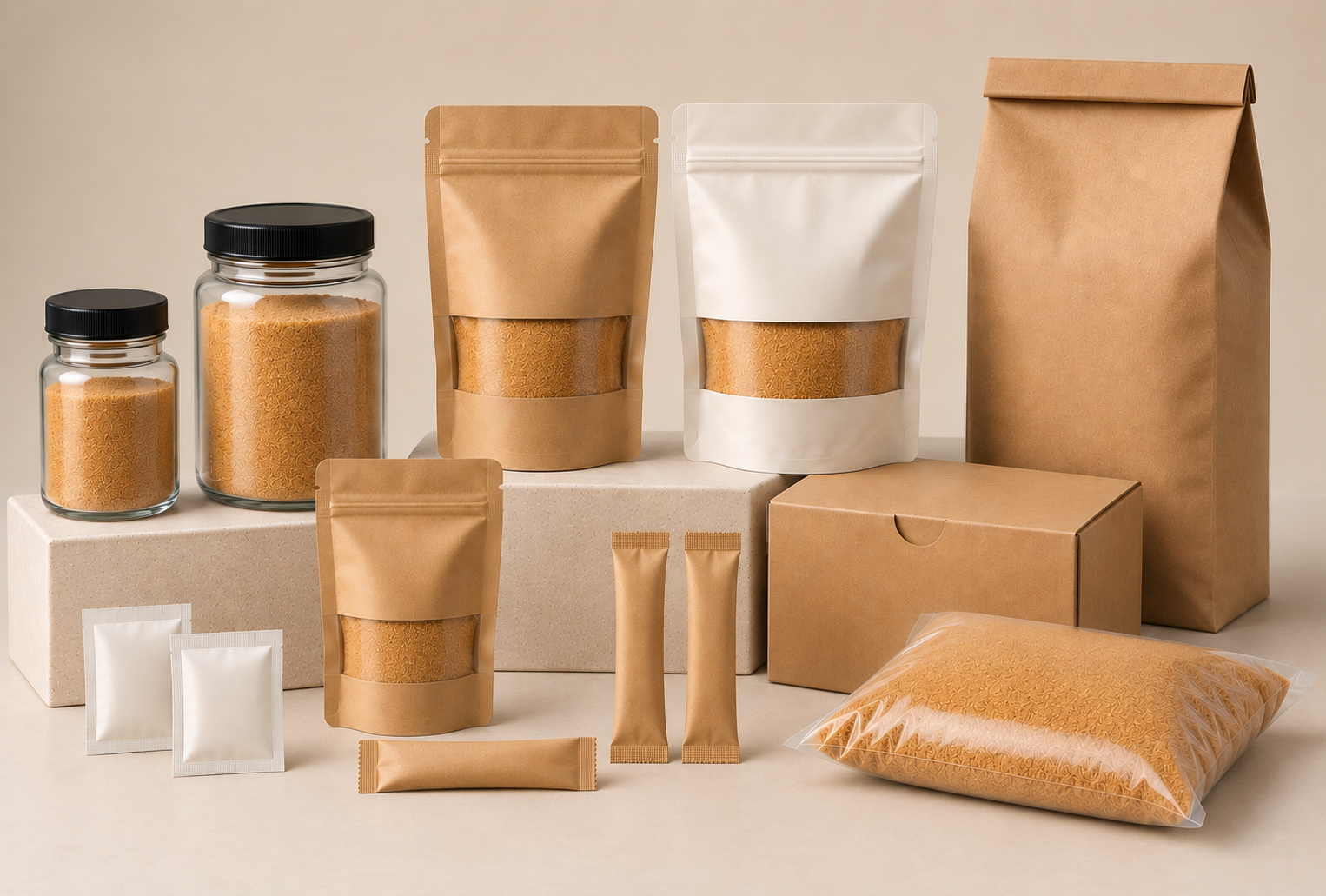
We pack in 20 kg carton boxes or 25 kg paper sacks, with custom mesh size and flexible minimum order quantity based on buyer needs.
From Coconut Sap to an Export Ready Product
The journey of coconut sugar starts with a simple raw material, coconut flower sap.
However, producing an export-ready product requires more than transforming liquid sap into sugar granules. It requires controlled sourcing, careful processing, moisture management, particle-size control, quality testing, appropriate packaging, traceability, and export coordination.
For B2B buyers, understanding this process makes it easier to evaluate potential coconut sugar manufacturers and identify suppliers that can support consistent international supply.
If you are looking for a coconut sugar manufacturer that can discuss your product specifications, sourcing requirements, and export needs, Javelo is ready to talk.