
Javelo
Coconut Sugar Benefits: Is Organic Coconut Sugar Actually Healthy? A B2B Perspective

Coconut sugar benefits are real, but they are smaller than most marketing suggests. It contains small amounts of certain nutrients, but it is still a sugar-rich ingredient. However, it offers a distinctive caramel-like flavor and can be used in applications ranging from baked goods to beverages and sauces.
For food and beverage buyers, the real value of organic coconut sugar lies in clean-label positioning, flavor, and a story behind it that consumers understand.
What Is Coconut Sugar?
Coconut sugar is a natural sweetener derived from the sap of coconut palm flower buds. Unlike refined sugars, it undergoes minimal processing. This process preserves more of the sap’s natural nutrients, giving coconut sugar a distinct caramel flavor and a light brown color.
Coconut sugar can produce organic coconut sugar, which is useful for food and beverage products with organic claims. Compared to conventional whiter sugar or even cane sugar, organic coconut sugar stands out for its origin, production method, and nutritional profile.
Certified organic coconut sugar assures buyers of non-GMO practices, minimal chemical intervention, and adherence to recognized organic standards. For B2B buyers, this means a traceable, premium ingredient that meets consumer expectations for transparency and health.
Coconut Sugar Benefits: What Does the Evidence Actually Say?
Coconut sugar is often promoted as a natural alternative to refined sugar. Some of its characteristics may make it attractive for particular food and beverage applications, but its culinary advantages should be distinguished from proven health benefits.
Lower Glycemic Index Than Refined Sugar
The glycemic index (GI) ranks foods by how quickly they raise blood glucose. A lower number means a slower rise. Foods with a GI of 55 or below are usually called low-GI foods.
Published figures for coconut sugar are not identical. Researchers at the Food and Nutrition Research Institute in the Philippines reported a GI of about 35. The University of Sydney's glycemic index service measured a higher value of about 54. Both sit under the low-GI line, but 54 is very close to the limit. Refined white sugar is commonly reported at around 60 to 65.
Why do the numbers differ? The Philippine researchers noted that harvest time and processing methods can change the result. Test groups and testing methods also differ between studies. For this reason, it is safer to say that coconut sugar has a GI in a range, not one fixed number.
It is also worth knowing that a lower GI does not automatically mean better health. Nutrition experts point out that the link between low-GI foods and real health outcomes is still debated.
Contains Inulin, a Prebiotic Fiber
Laboratory analysis of coconut sap sugar found a meaningful amount of inulin, about 4.7 grams per 100 grams. Inulin is a type of fiber that the body does not digest in the upper gut. It can feed helpful gut bacteria, which is why it is called a prebiotic.
But people use sweeteners in small amounts, so the inulin they actually get from a normal serving is small. Researchers describe coconut sugar as a promising functional ingredient, not as a treatment for any condition.
Small Amounts of Naturally Occurring Minerals
Coconut sugar keeps small amounts of minerals such as potassium, zinc, and iron. However, the amounts can vary depending on the raw material, production conditions, and analytical method.
The important thing is that detecting a nutrient in an ingredient does not necessarily mean that the ingredient provides a nutritionally significant amount in a typical serving. To get a meaningful dose of any mineral from coconut sugar, a person would need to eat far more sugar than is healthy.
So it is fair to say coconut sugar contains trace minerals. It is not fair to call it a good source of minerals.
Less Processed, With a Caramel Flavor Profile
This benefit is more about product development than nutrition. Coconut sugar has a warm, caramel-like taste that works well in beverages, bakery, sauces, and snacks. It can often replace brown sugar or cane sugar in a recipe without a major change in method. It is because coconut sugar is often described as less refined than conventional sugar.
However, less refined does not automatically mean healthier. Processing methods can vary, and the degree of processing alone does not establish a product’s overall nutritional value or health effects.
Benefits of Organic Coconut Sugar for Buyers
Many buyers ask whether organic coconut sugar is healthier. The honest answer is that organic status does not change the sugar itself. Organic and natural coconut sugar are made from the same type of sap, and the nutrition is expected to be similar.
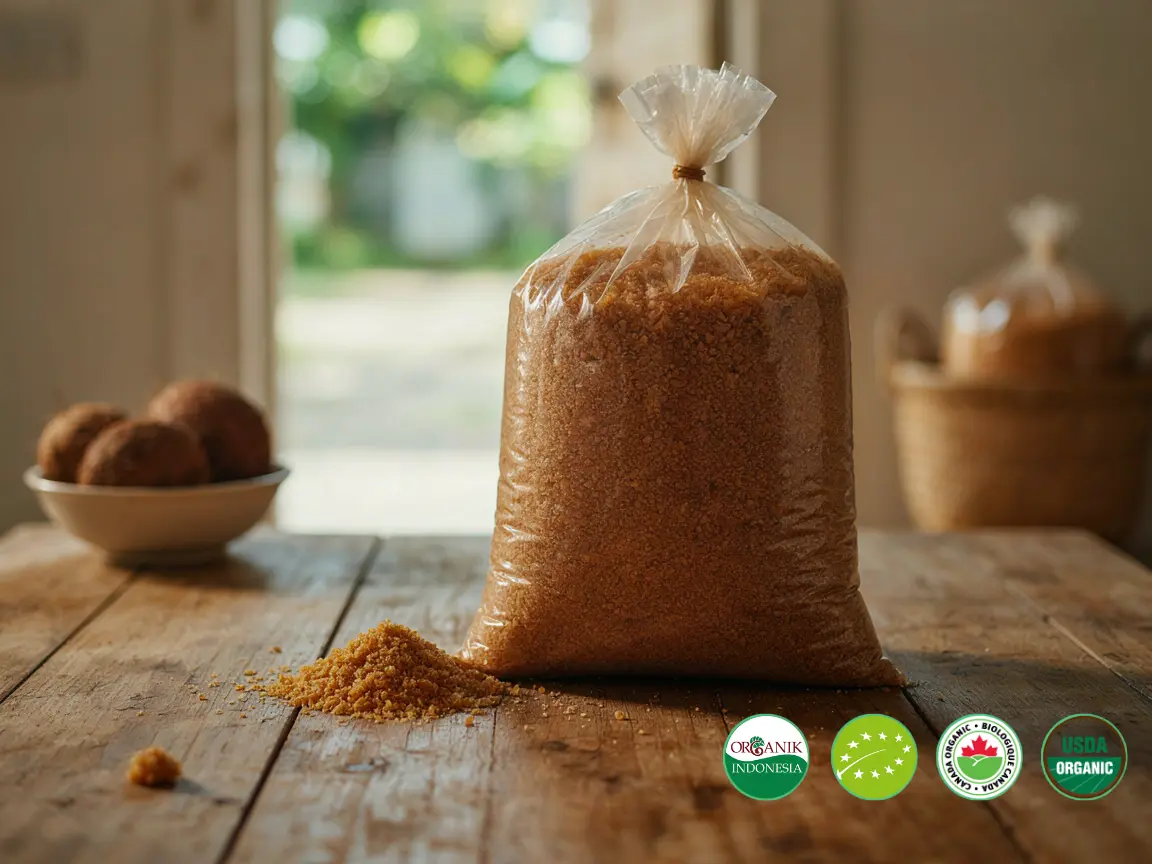
The real difference is certification and farming practice. Organic coconut sugar must meet the rules of an organic standard, which cover how the coconut palms are managed, how the product is handled, and how records are kept. Common standards for export markets include USDA Organic, EU Organic, Canada Organic, and Indonesia Organic.
For a buyer, the benefits of organic coconut sugar are therefore about market access and trust:
Market requirements. Many retailers and brands in the United States, Europe, and Canada ask for certified organic ingredients.
Brand positioning. An organic claim on the final product needs a certified organic ingredient behind it.
Documented practices. Certification means an outside body checks the supply chain.
Is Organic Coconut Sugar Really Healthy?
It Is Still Sugar
Coconut sugar also organic coconut sugar can be used as a sweetener, but it should not be considered a health food simply because it comes from a natural source. To assess its nutritional implications, buyers need to consider its sugar content, serving size role in the finished product, and the evidence behind any health related claims.
Organic coconut sugar is mostly sucrose and has about the same calories as white sugar. Eating a lot of it can have the same effects as eating other added sugars, including extra calories and a higher risk of tooth decay. Several nutrition reviewers describe it as slightly better than refined sugar but not a healthy food.
Is Organic Coconut Sugar Good for Diabetics?
Organic coconut sugar should not automatically be described as suitable for people with diabetes. It contains sugars and digestible carbohydrates, which can contribute to blood glucose levels. Although organic coconut sugar comes with organic certification, it does not change that basic consideration.
A lower GI value, where demonstrated for a particular product, would not by itself establish that the product is safe or appropriate for everyone with diabetes. Individual needs, serving sizes, total carbohydrate intake, and the composition of the overall meal all matter.
It means food and beverage manufacturers developing products for people with diabetes should avoid unsupported claims such as “diabetic-friendly,” “blood-sugar safe,” “or safe for diabetics.” Claims about blood glucose or disease related suitability require appropriate scientific support and careful regulatory review.
What Health Authorities Recommend?
The World Health Organization advises that free sugars should make up less than 10% of daily energy intake, with further reduction to 5% or less suggested for additional health benefits. This guidance applies to sugars of every kind, including honey, syrups, and coconut sugar.
For food and beverage manufacturers, this means evaluating the finished product’s overall nutritional profile rather than only relying on the source or marketing description of organic coconut sugar sweetener.
What These Benefits Mean for Food and Beverage Brands
For B2B buyers, the most useful benefits of organic coconut sugar are those that can add value to a product and supported by reliable information.
Clean-Label and Natural Positioning
Coconut sugar fits well in products that aim for a short, simple ingredient list. Consumers recognize the name and link it with natural sweeteners. Combined with an organic certificate, it gives brands a clear story for the label and for marketing.
Flavor and Formulation Advantages
The caramel taste adds depth to coffee, tea, plant-based drinks, granola, and baked goods. Organic coconut sugar can also be made in different mesh sizes, and in liquid, block, and powder forms through product development. If you are building a new recipe, our team can support custom coconut sugar formulation from idea to sampling and mass production.
Organic Positioning Supported by Certification
For brands targeting certified-organic product lines, sourcing certified organic coconut sugar may help meet ingredient and supply-chain requirements. The relevant certificate, product scope, handling requirements, and destination market rules must be checked before making organic claims.
Even though organic positioning should not be presented as proof that the finished product is healthier. Product claims must reflect what the evidence and applicable regulations actually support.
Reliable Specifications and Consistent Quality
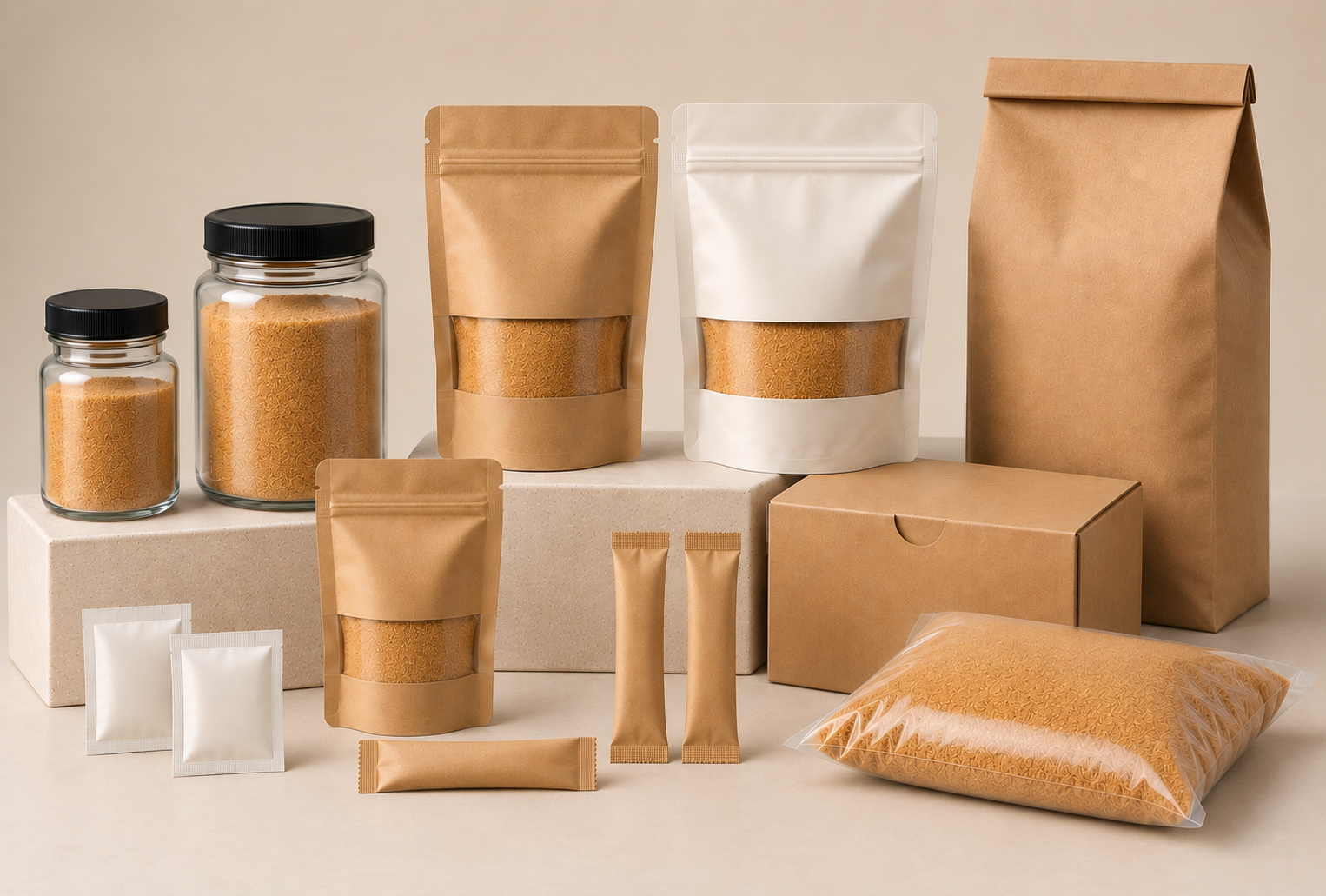
A supplier’s product specifications can help buyers assess whether the organic coconut sugar fits their manufacturing requirements. Depending on the application, relevant parameters may include:
Color, flavor, and mesh size
Moisture content and storage requirements
Nutritional composition, where relevant
Microbiological and other food safety criteria
Packaging, shelf life, and batch identification
Buyers should define acceptable limits with their supplier and verify that the documentation matches the intended application.
Source Organic Coconut Sugar for Your Business
Organic coconut sugar presents a compelling opportunity for B2B international buyers looking to tap into health, sustainability, and clean-label trends. By understanding coconut sugar benefits, health implications, and the supplier landscape, you can make informed sourcing decisions that align with both market demand and corporate values.
Ready to elevate your product offerings? Explore our certified, high-quality organic coconut sugar solutions and connect with our sourcing specialists to discuss your requirements.